Sub-Slab Radon Mitigation for Columbus Basements and Slabs
Sub-slab radon mitigation is the system most Columbus homeowners end up with when a test runs high. EPA calls it the most common and usually the most reliable method, and Ohio spells out in its rules how it has to be built.
A sub-slab system runs a pipe through the basement or slab floor, and a fan outside the living space pulls soil gas from underneath and vents it above the roof. EPA says some systems cut radon by up to 99 percent. Bob Vila (2022) lists sub-slab suction at $800–$2,500; Fixr (2025) gives $500–$2,500.
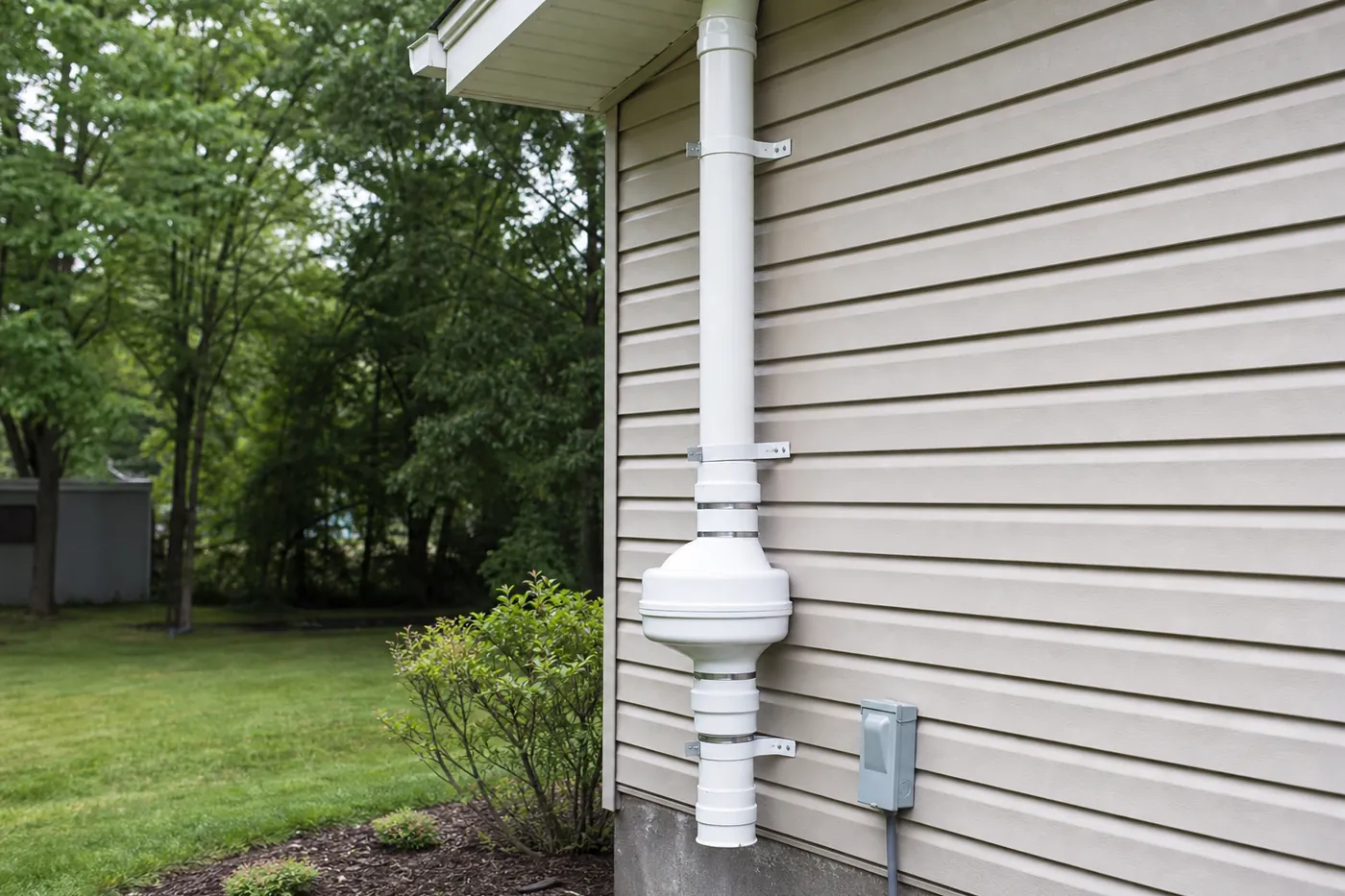
How does sub-slab radon mitigation work?
The installer cores a hole in the floor, digs out a small pit underneath, and seals a pipe at least 3 inches across into it (Ohio Radon Mitigation Standards). A radon fan on that pipe keeps a slight vacuum under the slab, so soil gas goes into the pipe instead of up through cracks and the joint where floor meets wall. Before drilling, a careful installer checks how far that vacuum will reach, using what EPA calls a soil communication test: suction in one small hole, smoke at another. Tight fill under the floor can call for a second suction point.
Where can the fan and pipe go under Ohio rules?
- Fan location. In the attic, in a garage that is not under living space, or on the outside of the house. Never in a basement, crawl space or any heated or cooled room.
- Exhaust. Straight up with no rain cap, above the highest eave, at least 10 feet above the ground, at least 10 feet from any window or door less than 2 feet below it, and 12 inches above the roof it passes.
- Power. An outdoor fan needs a disconnect switch within sight and within 4 feet of it.
- Labels. The pipe on each floor, the fan, the breaker and any sealed sump are marked "RADON REDUCTION SYSTEM."
What about the sump pit and block walls?
Ohio's standards say a sump pit holding a working pump should not be the main suction point, and any sump that lets soil gas in must get an airtight, rigid lid with a view-port, sealed with removable caulk so the pump can still be serviced. If that sump is the basement's only relief for excess water, the installer has to keep a trapped drain path open. Hollow block walls can carry radon too. EPA describes block-wall suction as an add-on to sub-slab suction, and Ohio requires the tops of the blocks to be closed and sealed when it is used.
How do you know the system is working?
Every fan system in Ohio needs a monitor. Most use a U-tube manometer on the pipe, marked with its start-up reading; if the liquid levels out, the fan has stopped pulling. The follow-up radon test must fall between 24 hours and 30 days after start-up, and in a house with a natural-draft furnace or water heater the installer has to check for backdrafting right after the fan starts. Compare what each kind of system costs in the Columbus radon mitigation cost guide.
Questions homeowners ask
Can the radon fan go in my basement?
No. Ohio's mitigation standards bar radon fans from basements, crawl spaces, heated or cooled rooms, and anywhere below ground or directly beneath living space. Fans go in an attic, in a garage that is not under living space, or on the outside of the house. EPA gives the same advice: the fan must never sit in or below a livable area.
Tell us where things stand
Share what you know so far: a test result, a closing date, or just the kind of foundation the house sits on. One independent radon mitigation specialist who works around Columbus gets back to you about next steps.